Embracing Change
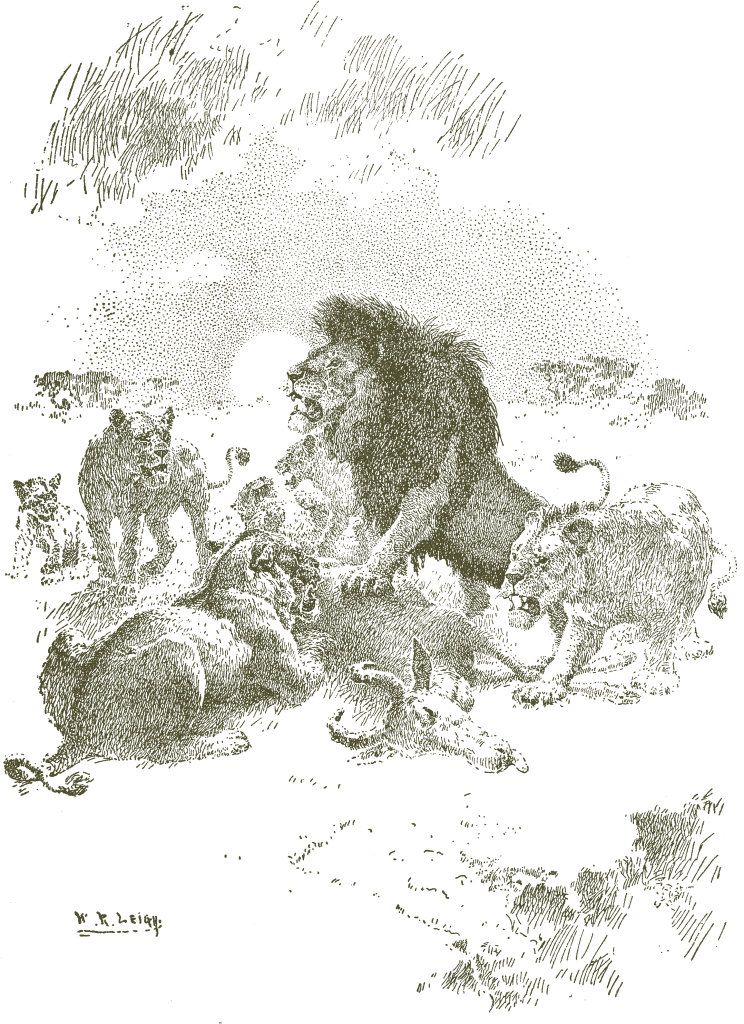
Lion hunt differently all the time. No two stalks are identical; few kills unfold the same way. In different regions they may specialise in particular prey species, and certain ways of taking them down, but they don’t perfect a single technique that applies to all hunts—they adapt and adjust to the opportunity presented. This isn’t inefficiency; it’s mastery. In the language of resilience, this is variability: the capacity to function across a range of conditions rather than optimising for a single set of circumstances.
Last week, we explored diversity as the first of Brian Walker’s attributes of Social-Ecological Resilience (SER)—the presence of different elements within a system that provide multiple options when conditions shift. This week, we turn to the second attribute: variability. Whilst diversity asks what elements exist, variability asks how those elements behave when circumstances change. It’s the difference between having multiple tools and knowing how to use them when the situation demands it.
In Nature, as in special forces operations, variability and unpredictability is survival. In our own lives, it’s the difference between adaptation and collapse.
The Resilience of Irregular Rainfall
Walker’s work in African savannahs reveals a counterintuitive truth: variability isn’t something to eliminate—it’s something to preserve. In Finding Resilience, he describes how traditional pastoral communities in East Africa have thrived for centuries not despite irregular rainfall patterns, but because of them.
These communities maintain diverse herds—cattle, goats, sheep, sometimes camels. That’s diversity: different livestock species with different strengths. But what makes them resilient is the variability in how they manage these herds. When rains fail in one area, herders move their cattle to where moisture remains. When a particular grazing zone degrades, they shift to another, allowing the first to recover. During prolonged dry periods, they might increase the proportion of goats in their herds, as goats survive on rougher forage than cattle. This adaptive behaviour—the capacity to adjust strategies as conditions change—is variability in action.
The nomadic rhythm isn’t chaotic wandering; it’s adaptive management calibrated to ecological variability. The system works precisely because the environment doesn’t behave predictably, and the people have learned not to demand that it does.
Problems arise when external forces attempt to impose stability. Colonial and post-colonial governments, viewing nomadic movement as primitive, established sedentary ranching schemes with fixed water points and permanent settlements. The intention was to create predictable, manageable systems. The result was catastrophic.
Concentrated grazing around permanent water sources stripped vegetation, compacted soil, and triggered erosion. Without mobility—without behavioural variability—herders couldn’t respond to localized drought or disease outbreaks. The diversity of livestock remained, but the adaptive capacity to deploy those options flexibly was eliminated. When severe drought arrived, communities that had survived centuries of variable rainfall collapsed under conditions they would once have navigated with relative ease.
Kruger National Park experienced this exact pattern. From the 1930s onward, over 300 artificial boreholes and 50 dams were constructed across the park, powered by windmill pumps. The intention was sound: provide water to game in the drier western regions. But the result mirrored the pastoralist collapse. Water-dependent species like elephant, buffalo, and zebra concentrated around these artificial water points, triggering severe localised overgrazing and shrubby bush encroachment. More critically, lion prides followed the increased prey densities into areas that had previously served as refuges for rare species like sable, roan, and tsessebe—specialist grazers that depend on specific tall-grass breeding habitats. These rare antelope couldn’t escape the competition and predation pressure. Their populations plummeted. Following the science, SANParks has subsequently implemented a programme to close over two-thirds of these artificial water points after 2003, deliberately restoring natural variability to the system.
The lesson is stark: systems managed to minimise variability become brittle. Resilience emerges not from dampening fluctuations but from developing the capacity to function across them.
The Stoic Preparation for Fortune’s Turns
The Stoics understood this principle intimately. Roman Emperor Marcus Aurelius (121 – 180 AD/CE), writing in Meditations, didn’t envision a life of unbroken calm. He prepared for turbulence. “When you wake up in the morning, tell yourself: The people I deal with today will be meddling, ungrateful, arrogant, dishonest, jealous, and surly.” This wasn’t pessimism—it was variability training.
Seneca (4 – 65 AD/CE), one of first century Rome’s wealthiest and most influential men, took the practice further, advocating deliberate discomfort. He suggested periodic fasting, sleeping on hard floors, wearing rough clothing—not as punishment but as rehearsal. “Set aside a certain number of days,” he wrote, “during which you shall be content with the scantiest and cheapest fare… that it may be a test of yourself instead of a mere pastime.”
This was premeditatio malorum: the premeditation of adversity. By voluntarily experiencing hardship, Stoics expanded their range of psychological tolerance. They weren’t trying to eliminate difficulty from life; they were ensuring that when difficulty arrived uninvited, it wouldn’t exceed their capacity to endure it.
The parallel to ecological variability is direct. Just as savannahs maintain resilience through irregular rainfall and adaptive responses, human beings maintain psychological resilience through irregular experience and adaptive capacity. The mind that encounters only comfort becomes as fragile as the rangeland managed for constant optimal conditions.
Variability in Special Forces Teams
In the special operations community, this principle manifests with particular intensity. Elite units don’t train operators to function under ideal conditions—they train them to function when everything goes wrong.
SOF teams operate in environments where predictability is an illusion. Intelligence proves incomplete. Equipment fails. Cultural assumptions crumble. Mission parameters change mid-execution. These operators haven’t perfected responses to anticipated scenarios; they’ve developed adaptive capacity across a spectrum of psychological and tactical conditions.
This requires embracing emotional variability as a training tool rather than treating it as a system failure. Conventional military culture often emphasises constant emotional control—maintaining composure, projecting confidence, suppressing fear. But resilience doesn’t emerge from emotional suppression; it emerges from developing the capacity to experience psychological turbulence and remain functional within it.
Soldiers who train only in controlled, sterile environments never develop the adaptive range necessary for genuine crisis response. They’ve optimised for “normally,” which means when ambiguity escalates, when moral complexity intensifies, when fear or doubt surge beyond familiar boundaries, they face the same problem as the sedentary pastoralist facing drought: their system lacks the flexibility to absorb the disturbance.
Truly resilient training deliberately introduces variability—managed stress inoculation that expands the window of tolerance for psychological distress. This isn’t trauma accumulation; its calibrated exposure followed by reflection and recovery. A warrior who has experienced fear, uncertainty, frustration, and moral ambiguity in training contexts, and has developed strategies for remaining functional within these states, possesses far greater resilience than one who has been protected from such experiences.
The paradox is that attempting to shield soldiers from psychological variability actually undermines their resilience. It’s the equivalent of ecological over-management: it produces brittle minds that fracture when reality exceeds control.
Signals, Not Failures
Walker emphasises that in resilient systems, fluctuations aren’t problems to eliminate—they’re information to process. Variable rainfall tells pastoralists where to move. Variable prey density tells predators where to hunt. Variability is signal.
The same applies to emotion. Discomfort, fear, and doubt aren’t system malfunctions; they’re data. A soldier who interprets anxiety as failure will suppress it, eliminating the signal and reducing situational awareness. An operator who interprets anxiety as information—something here requires attention—can use it to sharpen focus and adjust response.
Emotion regulation improves when we accept that psychological states will fluctuate, and that this fluctuation is healthy. Trying to maintain constant internal conditions is as futile as trying to maintain constant external conditions. Both attempts trade adaptability for the illusion of control.
Living with Variability
On foot in the African bush, you learn quickly that no two days are identical. The weather shifts. Animal behaviour changes—as per the lioness charge, never presume, remember? Areas and trails that were accessible or full of game yesterday may not be so today. Don’t rue this—work with it. Develop a repertoire of responses rather than a single protocol. Remain alert to changing conditions rather than expecting the environment to conform to your plans.
This is how resilient systems function. Not by achieving stability, but by maintaining capacity across variable conditions. Not by perfecting a single optimal state, but by cultivating the range to adapt when states shift.
Walker’s second attribute reminds us that resilience isn’t found in constancy. It’s found in the ability to “roll with the punches”—to absorb disturbance, learn from turbulence, and emerge with capacity intact.
Lion don’t hunt the same way every time because their environment doesn’t present the same conditions every time. Their variability is their strength. Ours can be too.
Next week, the third attribute of Social-Ecological Resilience: Modularity.
Leave a Reply