Boundaries that Preserve the Whole
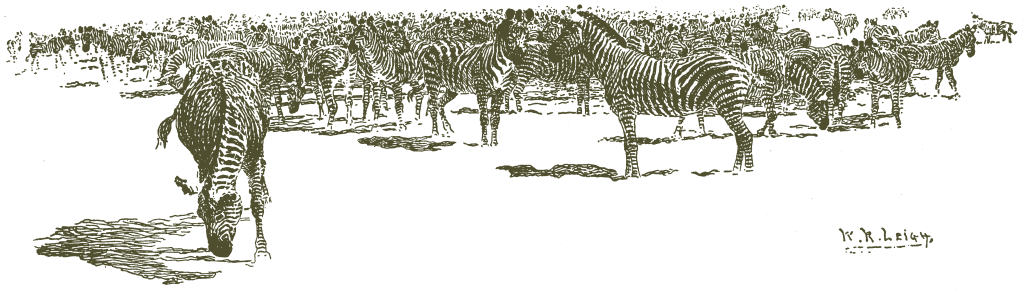
Every year, nearly two million wild herbivores cycle through the Serengeti-Mara ecosystem spanning Kenya and Tanzania in East Africa on the greatest terrestrial migration on earth. This isn’t one undifferentiated river of life. It’s a sequence—a modular procession of species, each occupying a distinct role. Zebra are the first to move, cropping the tall upper inflorescences of the grasses. Wildebeest follow days later, grazing the mid-level leaves exposed by the zebra’s work. Thomson’s gazelle trail behind, selecting the short, protein-rich regrowth and low-growing forbs revealed by both preceding waves. Each species processes the grassland differently, and the temporal separation between them creates boundaries—modules within the migration—that prevent direct competition from collapsing the system.
This is modularity in action: Brian Walker’s third attribute of Social-Ecological Resilience. Where diversity asks what elements exist in a system, and variability asks how those elements respond to changing conditions, modularity asks how those elements are connected—and, critically, where the boundaries between them lie. In Walker’s framework, resilient systems consist of modular components: sufficiently connected to function as a whole yet sufficiently partitioned that failure in one part doesn’t cause the entire system to collapse.
In Nature, in special forces teams, and in our own lives, the question is never simply whether we’re connected—it’s whether we’re connected in ways that contain damage or conduct it.
The Fire Mosaic and the Nylsvlei Floodplain
The Kruger National Park in the Eastern Lowveld of South Africa offers one of the most vivid illustrations of modularity’s power. Since 2002, Kruger’s fire management has moved away from the old rotational block-burning approach—that treated the landscape as a single uniform system to be managed on fixed schedules—toward patch-mosaic burning. Section rangers now set early-season fires that break the veld into a patchwork of burned and unburned areas. The result is a landscape of modules: recently burned patches offering mineral-rich ash and nutritious regrowth sit alongside unburned refugia where cover-dependent species shelter and tall-grass specialists the likes of Tsessebe, Roan and Sable antelope breed. Rocky ridges, riverine thickets, and drainage lines act as natural firebreaks, containing each burn within its patch.
This modular architecture is the landscape’s resilience. When a late-season wildfire—driven by lightning or wind—tears through the park, it encounters a mosaic rather than a continuous fuel load. It burns hot through one patch and dies at the boundary of another already burned earlier in the season. The disturbance is absorbed locally rather than cascading across the whole. Without those internal boundaries, a single ignition under the wrong conditions could consume everything.
Walker’s early research at Nylsvlei in the then-Transvaal, documented in An African Savanna—co-authored with Robert Scholes—revealed modularity operating at a finer scale. The Nylsvlei floodplain is not a homogeneous wetland but a mosaic of distinct vegetation communities—broad-leaved savannah, fine-leaved Acacia savannah, and seasonally inundated grassland—each responding differently to grazing pressure, fire, and flooding. These vegetation modules function as semi-independent units. Overgrazing in the Acacia savannah doesn’t immediately degrade the broad-leaved community. A flood that swamps one grassland zone leaves adjacent higher ground intact. The system’s internal partitioning allows it to absorb disturbance piecemeal rather than in totality.
Walker emphasises the danger at both extremes. An over-connected system—where every component is intensively linked to every other—transmits disturbance everywhere at once. But an under-connected system fragments into isolated units that can’t share resources or learning. Resilience lies in the balance: connected enough to communicate, partitioned enough to contain disturbance.
The Stoic Architecture of the Mind
The Stoics, characteristically, understood modularity as an internal discipline. Epictetus (4 – 65 AD/CE), born into slavery and intimately familiar with circumstances beyond his command, built his entire philosophy around a fundamental boundary—the Dichotomy of Control: the distinction between what is up to us (within our control) and what not up to us (beyond our control). This wasn’t mere intellectual categorisation—it was psychological modularity. By maintaining a clear partition between the domain of his own judgements, choices, and responses on one side, and the domain of external events, other people’s actions, and fortune’s whims on the other, Epictetus ensured that disturbance in one domain would not cascade through the other.
“Make the best use of what is in your power,” he taught, “and take the rest as it happens.” This is compartmentalisation with purpose—not rigid disconnection, but a deliberate architectural choice about where the firebreaks in one’s psyche should lie.
Marcus Aurelius (121 – 180 AD/CE) practised the same principle under vastly different circumstances. As Roman Emperor, he faced pressures from every direction—military campaigns, political intrigue, plague, personal grief. Meditations, his private diaries, reveal a man who survived by maintaining internal boundaries. He could grieve the loss of his children without allowing that grief to paralyse his capacity for governance of the empire. He could acknowledge the corruption of those around him without allowing cynicism to corrode his commitment to justice. Each psychological domain remained connected to the others—he was no dissociated automaton—but the boundaries between them were sufficiently robust that strain in one area didn’t collapse his whole self.
Modularity in Special Forces Teams
In the special operations community, modularity operates at two critical levels: the structural and the psychological.
At the team level, small units are inherently modular by design. Deep reconnaissance missions usually operate in pairs or a stick of four, each capable of independent action whilst remaining part of the larger element. This structural modularity ensures that if one individual or pair is compromised, pinned down, or separated, the remainder can continue to function. Typically, a team is comprised of specialists: team leader with HF radio, a medic—sometimes even a doctor, machine gunner, and an expert tracker; but each member is thoroughly trained in every element. The team doesn’t collapse because one component is under strain. Crucially, this also applies to emotional contagion: conflict, fatigue, or strain within one module does not automatically contaminate the entire unit. Operators cultivate norms that allow private processing, compartmentalised debriefs, and temporary withdrawal without stigma. A team in which every member’s emotional state is immediately transmitted to every other member is as dangerously over-connected as a savannah without firebreaks—one person’s bad day becomes everyone’s crisis.
Within the individual, modularity becomes even more critical. Operators must maintain distinct cognitive and emotional spaces—separating operational identity from family identity, mission focus from personal concerns, professional role from private self. The operator who cannot draw these internal boundaries, who allows a difficult inter-personal relationship to affect tactical decision-making, or who lets mission outcomes define personal worth, is vulnerable to precisely the cascading failure that modularity is designed to prevent. Mental resilience improves when an individual can recognise: this part of me is strained, but my system still functions as a whole.
The danger lies in extremes. Hyper-modularity—psychological compartments so rigid that nothing passes between them—creates its own pathology. Soldiers who wall off their combat experiences so completely that they become inaccessible to reflection or relationship risk dissociation and identity fragmentation. They function, but they don’t integrate. They survive operations, but they can’t process them.
What resilient operators develop is better described as flexible compartmentalisation: the ability to create temporary boundaries that protect critical functions whilst maintaining pathways for integration and holistic processing when it’s safe to do so. The firebreak holds during the blaze, but once the fire passes, the landscape reconnects.
A Mosaic, Not a Monoculture
Walking through the African bush, you experience modularity instinctively. The landscape isn’t uniform—it’s a mosaic. Dense riverine forest gives way to open grassland, which yields to rocky hillside, which transitions to Mopane woodland. Each zone has its own character, its own inhabitants, its own rules of engagement. You adjust as you move between them. Your attention shifts. Your pace changes. Your risk assessment recalibrates.
This is how resilient systems are structured. Not as seamless, border less wholes where everything affects everything else simultaneously, but as connected yet bounded components where disturbance can be absorbed, contained, and processed without overwhelming the entirety.
Walker’s third attribute asks a deceptively simple question of any system: Is this becoming more fully connected, or are there parts that are becoming too isolated, or too loosely linked? The answer matters enormously—because a system without boundaries is a system without resilience. And a system with boundaries too rigid is a system that cannot learn.
The Serengeti migration works not because all grazers move as one, but because each occupies its own module within the whole—connected by the grassland they share, separated by the timing and manner in which they move through it. The savannah burns in patches, not in totality. The mind that endures does the same.
Next week, the fourth attribute of Social-Ecological Resilience: Slow Variables.
Leave a Reply